
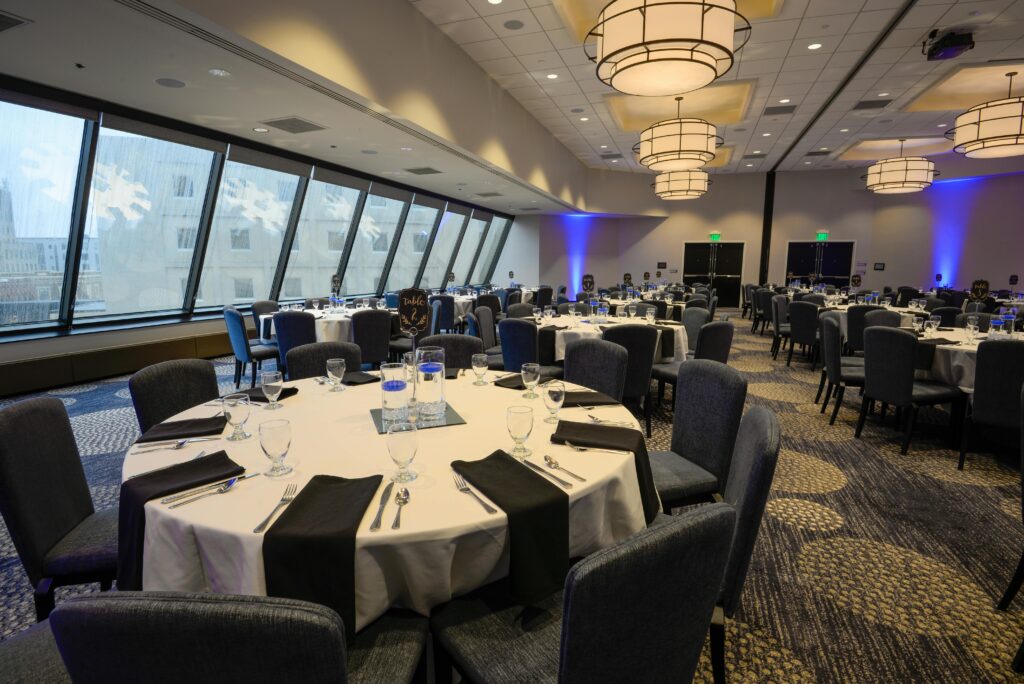
You just wrapped up your biggest corporate event of the year. The venue was stunning, the keynote speakers received standing ovations, and attendees raved about the networking sessions. By all outward appearances, it was a massive success. But when you sit down with your executive leadership team the following week, they only have one question on their minds.
How much revenue did this event actually generate?
If you struggle to answer that question with hard numbers, you are not alone. B2B marketers face mounting pressure to justify every dollar spent on experiential marketing. In fact, 63% of CMOs are under increased pressure to demonstrate the direct value of marketing’s contribution to revenue.
Why “Smile Sheets” Are No Longer Enough
For years, the event industry relied on basic headcount tracking and post-event satisfaction surveys to measure success. If attendees filled out a survey saying they had a great time and learned something new, the event was considered a win. These “smile sheets” were easy to distribute and collect, but they present a massive risk for modern B2B event marketers.
Relying solely on vanity metrics completely ignores the financial realities of running a business. There is a growing gap between what attendees expect and what executives demand. Attendees want cultural immersion, high-end hospitality, and memorable moments. Executives want lead generation, customer retention, and a clear return on their investment.
When you only measure satisfaction, you fail to bridge this gap. You leave leadership guessing whether the budget was well spent or simply wasted on a lavish party.
Compounding this problem is the issue of fragmented data. Event marketers often struggle to capture a unified narrative when information is scattered across different tools. Your registration platform might show high attendance, but if that data doesn’t seamlessly integrate with your CRM, you cannot prove if those attendees actually converted into paying customers.
The Difference Between an Event That Feels Good and One That Performs
So, what is the fundamental difference between an event that “feels good” and one that actually “performs”?
An event that feels good prioritizes the immediate comfort and entertainment of the audience. It stops at the attendee experience. An event that performs uses that exact same experience as a strategic tool to actively drive behavior change and hit business objectives.
Getting to that next level of performance is exactly what event marketing services are designed to do. It’s about taking the excitement of a live experience and pointing it toward a clear objective, so you aren’t just left with nice photos, but with a community that’s ready to engage with your brand. When every detail is intentional, the event stops being a one-day expense and starts acting as a long-term investment that keeps your message moving forward.
| Focus Area | The “Feel Good” Event | The “Performing” Event |
|---|---|---|
| Primary Goal | Attendee satisfaction and entertainment | Measurable behavior change and ROI |
| Success Metric | Post-event survey scores (“smile sheets”) | Pipeline influence and revenue attribution |
| Data Collection | Fragmented across isolated platforms | Unified across CRM and event tech stack |
| Attendee Journey | One-size-fits-all scheduling | Personalized based on behavioral data |
The “Feels Good” Element: Cultural Immersion and Hospitality
We cannot dismiss the human element of gathering together. What makes an event feel truly incredible to attendees is the creative theming, seamless hospitality, and the opportunity to forge genuine emotional connections. People want to feel valued, and high-end experiential elements deliver that feeling perfectly.
These immersive experiences remain highly effective for building brand affinity. In fact, 78% of organizers say in-person conferences, summits, and conventions are their organization’s most impactful marketing channel.
But a strong warning comes with that statistic. You cannot let these experiential elements exist in a vacuum. If you spend your entire budget on premium catering and immersive lighting without tying those decisions back to strategic goals, you are planning a vacation, not a business event.
The “Performs” Element: Anchoring Creativity in Data
A performing event meets executive business objectives through rigorous data tracking and analysis. Every single creative choice serves a specific financial or strategic purpose.
This level of precision often requires utilizing in-house event analysts. These data specialists work alongside creative directors to calculate exact profitability and show progress against overall company goals. They help answer questions like, “Did our VIP networking lounge actually speed up the sales cycle for our top-tier accounts?”
The intersection of engagement and profitability is where the true value of an event lies. When you anchor your creativity in hard numbers, you build an asset that leadership will gladly fund year after year.
How to Build a Data-Driven Event Strategy
Treating event planning as a data-first discipline rather than just a creative endeavor changes everything. You have to stop viewing analytics as a post-event chore and start using it as the foundation of your entire planning process.
This requires a unified strategy that captures data across the entire attendee journey. From the moment a prospect receives a pre-registration email to the final post-event sales follow-up, every interaction must be tracked, measured, and analyzed.
Here are the actionable steps event marketers can take to build this data-driven framework.
Integrating Analytics into Creative Design
Audience segmentation and behavioral data should dictate your creative direction. Before you ever sign a contract with a venue or book a keynote speaker, look at the insights gathered from your CRM and past event data.
Use these insights to craft personalized attendee journeys that make people feel known and appreciated.
For example, if pre-event data shows a large segment of your audience struggles with remote team management, you can adjust your creative strategy. You might launch a specific gamification element that rewards attendees for joining breakout sessions on digital collaboration. This personalized touch directly influences attendee behavior, making them more likely to engage deeply with the content and ultimately convert.
Driving Profitability with Strategic Sponsorships
Targeted sponsorships play a massive role in offsetting event costs and directly fueling your bottom line. But modern sponsors are no longer satisfied with simple logo placements on lanyards or cocktail napkins. They want measurable access to their target buyers.
To boost event profitability, you must prioritize comprehensive prospectus development. Focus on securing exclusive on-site commitments that integrate the sponsor into the fabric of the event.
You can use your audience data to prove the specific value of your event to potential partners. Show them exactly who is attending, their buying power, and their specific interests. When you offer sponsors an integrated brand experience backed by hard demographic data, you can charge a premium, significantly increasing your event’s profitability.
Leveraging Event Technology for Real-Time Pivoting
Modern event platforms are the engine that powers a data-driven strategy. You must utilize CRM integrations and robust management platforms to capture the full spectrum of attendee interactions.
Real-time event data allows organizers to adapt on the fly. If you notice through your mobile app analytics that a specific breakout session is underperforming, you can pivot. You might push a notification to attendees highlighting a different session or adjust the catering schedule to capture people leaving early.
“Robust event technology doesn’t just record what happened—it tells you what to do next. Capturing live data allows event marketers to rescue a failing session before the attendees even notice an issue.”
This adaptability is especially important in today’s “Anywhere-Work” culture. Robust digital and hybrid event solutions provide even more measurable data points, tracking exactly how long remote attendees watch a stream or engage in digital chat rooms.
Conclusion
Bridging the gap between a feel-good party and a high-performing business asset requires a relentless focus on strategy. You can no longer rely on vanity metrics and superficial feedback to justify your marketing spend.
Exceptional attendee experiences and hard ROI are not mutually exclusive. In fact, they completely depend on one another. You need the creative hospitality to draw the right audience in, and you need the rigorous data analysis to prove the financial value of their attendance.

 Brian Schreibertery has opinions about destination guides and highlights. Informed ones, backed by real experience — but opinions nonetheless, and they doesn't try to disguise them as neutral observation. They thinks a lot of what gets written about Destination Guides and Highlights, Travel Tips and Hacks, Packing and Preparation Tips is either too cautious to be useful or too confident to be credible, and they's work tends to sit deliberately in the space between those two failure modes.
Reading Brian's pieces, you get the sense of someone who has thought about this stuff seriously and arrived at actual conclusions — not just collected a range of perspectives and declined to pick one. That can be uncomfortable when they lands on something you disagree with. It's also why the writing is worth engaging with. Brian isn't interested in telling people what they want to hear. They is interested in telling them what they actually thinks, with enough reasoning behind it that you can push back if you want to. That kind of intellectual honesty is rarer than it should be.
What Brian is best at is the moment when a familiar topic reveals something unexpected — when the conventional wisdom turns out to be slightly off, or when a small shift in framing changes everything. They finds those moments consistently, which is why they's work tends to generate real discussion rather than just passive agreement.
Brian Schreibertery has opinions about destination guides and highlights. Informed ones, backed by real experience — but opinions nonetheless, and they doesn't try to disguise them as neutral observation. They thinks a lot of what gets written about Destination Guides and Highlights, Travel Tips and Hacks, Packing and Preparation Tips is either too cautious to be useful or too confident to be credible, and they's work tends to sit deliberately in the space between those two failure modes.
Reading Brian's pieces, you get the sense of someone who has thought about this stuff seriously and arrived at actual conclusions — not just collected a range of perspectives and declined to pick one. That can be uncomfortable when they lands on something you disagree with. It's also why the writing is worth engaging with. Brian isn't interested in telling people what they want to hear. They is interested in telling them what they actually thinks, with enough reasoning behind it that you can push back if you want to. That kind of intellectual honesty is rarer than it should be.
What Brian is best at is the moment when a familiar topic reveals something unexpected — when the conventional wisdom turns out to be slightly off, or when a small shift in framing changes everything. They finds those moments consistently, which is why they's work tends to generate real discussion rather than just passive agreement.